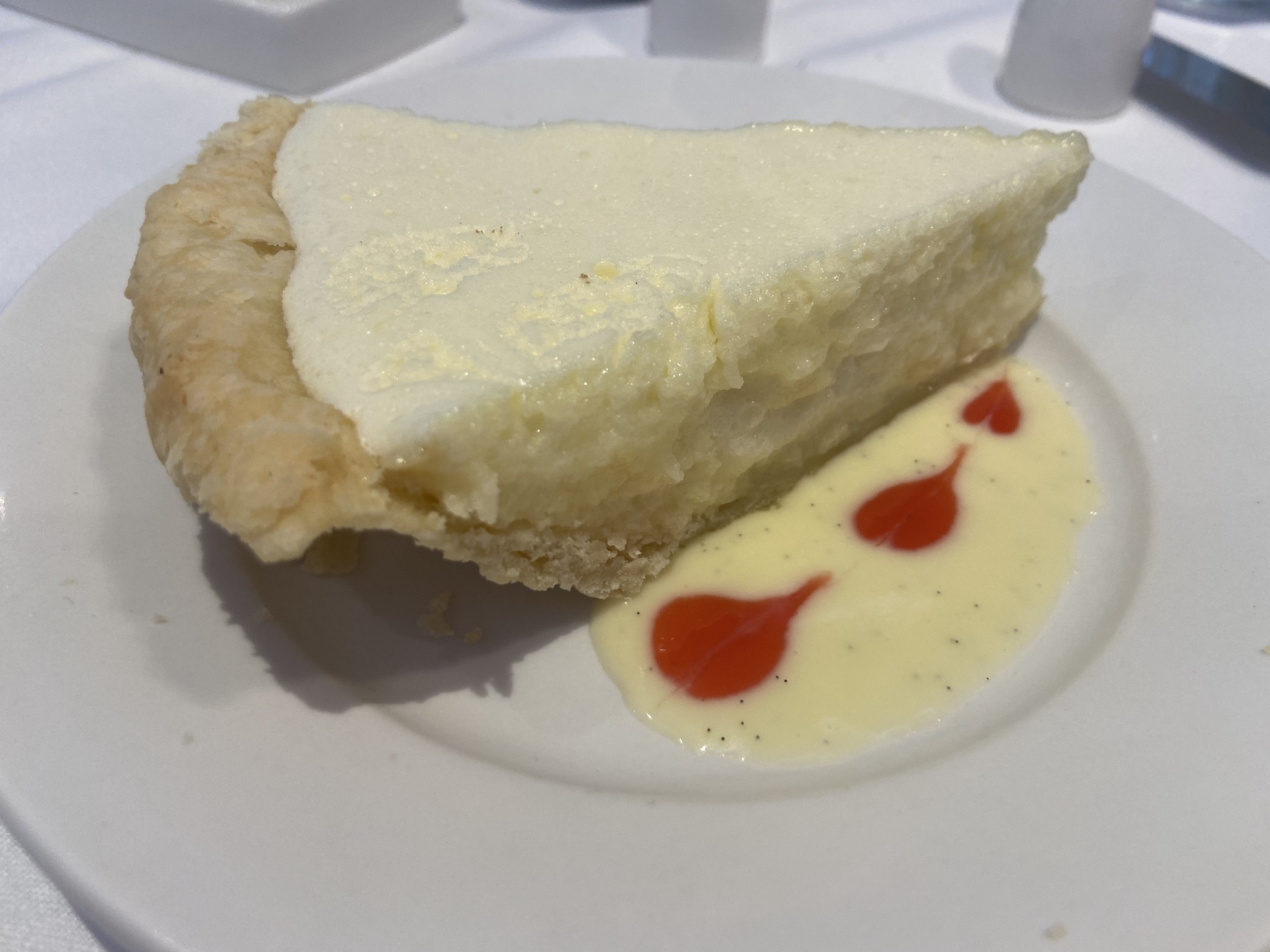
Recipe: Utica-Style Tomato Pie

Utica Style Tomato Pie

Utica-Style Tomato Pie

Utica-Style Tomato Pie is a gooey, unctuous treat made with lots of tomatoes and very little cheese; it is traditionally served at room temperature. We started with the Sal Detraglia recipe but did a lot of tinkering to get the balance we wanted: sweet juicy tomato topping on a sturdy but not over-bready crust. Makes one 11×17 pie; the recipe can be multiplied which you will probably want to do on future bakes after you taste your first effort.

Ingredients, for the dough:
1 ½ c all-purpose flour
1 c durum flour*
1 t sugar
1 t yeast
3 T extra virgin olive oil
2 t Kosher salt
1 ¼ c ice water, plus more if needed

For the sauce:
28-oz can crushed tomatoes, preferably San Marzano or another quality Italian Roma tomato
6-oz can tomato paste
Additional tomatoes (optional): 4 fresh Romas roasted until soft OR half a smaller (about 14-oz) can of crushed tomatoes**
½ t or so Kosher salt (depending on how salty your tomatoes are out of the can)
3 large garlic cloves, finely chopped (about 1 T)
1 T balsamic vinegar
2 T sugar
1/3 c finely grated Parmesan or Pecorino Romano
½ t dried oregano
Additional Extra Virgin Olive Oil as needed***

Method: add flours, yeast and sugar to the bowl of a orbital (eg Kitchenaid) mixer with dough hook, and run a few seconds on first speed to blend. With machine running, slowly add ice water and oil and mix until no dry flour is left, about 2 minutes. Dough should be cohesive but not sticky at the end; if needed add just a bit more water. Rest 10 minutes, then add salt and knead on second speed till dough is well developed, 6 minutes or a bit more. Transfer dough to a bowl liberally coated with olive oil and turn to coat all sides. Cover with plastic wrap and refrigerate at least overnight and as long as 48 hours.

Utica Style Tomato Pie

Dough will rise slightly during its 90 minute rest

On bake day, take the dough out of the refrigerator and bring it up to room temperature. Make the sauce: mix crushed tomatoes, tomato paste, garlic, balsamic vinegar, sugar and salt in a saucepan and simmer 20 minutes until slightly thickened; remove from stove and reserve. Transfer the dough to a floured surface and form an 11×17 rectangle. You may need a rolling pin but you can probably push the dough to the edges with your hands. Transfer to a half sheet pan or silicone pad which has been coated generously with olive oil. Sprinkle a little more olive oil on top then cover with plastic wrap and rest 90 minutes during which time the dough will have a slight additional rise.

Utica Style Tomato Pie

Ready to go in the oven

45 minutes before baking, preheat oven to 500 degrees and place a pizza stone on a middle rack. (If you use a silicone mat, you can preheat the half sheet pan directly, foregoing the pizza stone, then carefully transfer the formed dough on the pad into the pan [which you have temporarily moved to an insulated countertop surface] before adding the sauce.) At bake time, spread the sauce over the top of the dough, using a spatula to distribute it evenly, working with care to avoid deflating dough. Evenly distribute the cheese and oregano over the top, sprinkling with your hands.

Utica Style Tomato Pie

The finished product

Place pie in oven, in preheated sheet pan or in cold pan on hot pizza stone, and lower the heat to 450 degrees. Bake 10 minutes, then rotate 180 degrees and bake another 10 minutes. Remove from oven when the bottom of the pie is an even golden brown. Cool until the tomato topping solidifies (at least an hour), then slice into squares and serve.

*Sal Detraglia uses semolina flour for a sturdy crust and he uses more of it, which in our earlier tests caused the dough to tear. We used durum flour which is very similar to semolina but a finer grind. You could also make the pie with only all-purpose flour, but the result won’t have quite as much chew.

**The contents of the 28-oz tomato can and the tomato paste will give you sufficient sauce, but adding a little more tomato will make it extra-rich. Sal wants you to roast the tomatoes in the oven with oil, salt and pepper which is a lot of trouble; cooked tomatoes in a can will work fine.

***Utica pie places tend to use a lot of olive oil, which makes the pie crispy but possibly a bit greasy. A light coating on the surface of the sheet pan/silicone pad and more on the top of the dough is enough for us. You might want to drizzle a little more olive oil around the very edges of the pan after the pie is formed; this will give some extra crispiness to the outside edges, a treat for those who prefer these cuts.

Posted in Eating, Mains, Recipes | Tagged , , , | 10 Comments

You’re invited: Niman Ranch Hog Farmer Appreciation Celebration

Niman Ranch Hog Farmer Appreciation

Famed chef Thomas Keller will be your host and instructor at the Niman Ranch Hog Farmer Appreciation dinner

In the mid-aughts we did some work on the Niman Ranch website. We were guests of famed pig farmer and natural husbandry advocate Paul Willis in Thorton, IA. We toured his grounds, ate at his favorite coffee shop, even got to stay in his guest house. But the one thing we were not offered was an invite to the annual Farmer Appreciation dinner, where legendary chefs consider it an honor to be asked to travel to Iowa to cook for local hog producers as the community breaks bread together.

This year, with the pandemic, the 22nd Annual Hog Farmer Appreciation Celebration is going virtual. To quote the website, “we are inviting YOU to this special dinner, with a virtual cooking class taught by seven-time Michelin award winner and farmer advocate Chef Thomas Keller.  With your ticket, you will receive a meal kit shipped to your home that includes a recipe, the proteins needed for the dish and special additions hand-curated by Chef Keller. You will then be able to join for a LIVE virtual cooking class to participate in an interactive demonstration with Chef Keller himself.” The class/dinner will take place on Thursday, September 10, from 7:00 to 8:15 Central Time. The cost is $204.99 per person including meal kit and Fedex shipping. Register here.

Niman Ranch Hog Farmer Appreciation

Niman Ranch raises free-range pigs with humane animal husbandry practices.

And that’s not all. On August 20, you can learn to build masterful charcuterie boards with James Beard-nominated Chef Kelly Whitaker during a live virtual demonstration. The cost is $76.86 and includes a Fedex shipment of a variety of Niman Ranch charcuterie products which will be used during the demo as well as live access to an interactive class with Chef Kelley. Register here. All proceeds from both events benefit young farmers through the Niman Ranch Next Generation Foundation.

There are also a number of online forums which are free as far as I can tell. You can sit in on the keynote by renowned animal welfare expert Dr. Temple Grandin, which happens just after the Farmer Appreciation Dinner on September 10. On September 11, you can take a virtual tour of a Niman Ranch hog farm. There are also educational panels on a range of topics including improving farm animal welfare and how to achieve resilience throughout the food system in the time of COVID-19.

It’s quite a smorgasbord and, judging from the quality of other interactions we’ve had with the Niman Ranch team, everything is likely to be of the highest quality. And we’re all invited, so take some time to check out the schedule and learn about Niman Ranch here.


Posted in Cooking, Eating, Events, Food Heroes | Tagged , , , , , | Leave a comment

Taste test: Hot Crispy Oil

Hot Crispy Oil Choices

Participants in Hot Crispy Oil taste test

Hot Crispy Oil is having a moment. A local version is taking the upstate NY culinary scene by storm, the original “grumpy housewife” is back at the helm of her factory in China, and food god Kenji Lopez-Alt somehow came up with the idea of putting the stuff on ice cream. It’s time to do a taste comparison, and see which hot crispy oil reigns supreme.

Hot Crispy Oil

Hot Crispy Oil

The concept is brilliant in its simplicity: add texture, as well as heat, to spicy chili oil and tone down the fire so you can enjoy it in volume. The local product does this with “garlic, shallot, hot peppers and spices … for a condiment that has flavors like a hot sauce but a consistency akin to a dipping oil,” according to Deanna Fox in the Times Union. John Trimble, the originator, says it’s something he tinkered with for years at his COVID-shuttered La Serre restaurant. It can be considered the aristocrat of the group if for no reason than its price: $10 for 6 ounces, vs under $4 for a larger quantity for the other sauces. But it was the only sauce where we could taste the flavor in the oil, as well as the ingredients, and the only one we’d actually use for dipping a slice of baguette.

Spicy Chili Crisp

Spicy Chili Crisp

The original Spicy Chili Crisp was invented in a Guizhuo province workshop by Tao Huabi, the widow whose dour portrait appears on every label. It’s true (at least according to Wikipedia) that the product has made her a billionaire, also true that she put her son in charge of the factory, then kicked him out when he changed the formula and sales dropped. Another morsel was recently reported in the Wall Street Journal: fraudsters pretending to represent Lao Gan Ma attempted to scam Tencent for product placement on its social network; the company offered free bottles of chili sauce to those who tip it off to similar scams. In our product comparison, Spicy Chili Crisp had a neutral but pleasant taste without a lot of heat; the large amount of crispy fried garlic chips is its most distinctive attribute.

Hot Chili Sauce

Hot Chili Sauce

If you like Spicy Chili Crisp and want to expand your horizons, try Lao Gan Ma’s Hot Chili Sauce. The flavor profile is similar but the crispy garlic bits are reduced quite a bit and replaced by little chunks of rutabaga and whole shelled peanuts! We may like this better than Spicy Chili Crisp but, as with the flagship product, are a little unclear on how to use it. It’s too mild to be a spicy offset to Sichuan flavors like Lan Chi, our favorite chili condiment; these sauces are more of a flavor refresher along the lines of munching a pickle while you eat your Roma’s Italian Mix sub. Meanwhile, here is a recipe for peanut brittle made with Lao Gan Ma product.

House Made Chili Oil

House Made Chili Oil

The final component of our taste test was our own chili oil made according to instructions from Fuchsia Dunlop: chop or grind mild Sichuan dried red chilis and toast them in a wok; then slow-heat with neutral oil to infuse the flavor. This is designed as a cooking ingredient, not a condiment, and it paled in comparison to the other products, but now we’re wondering what we might end up with if we used a flavorful oil (but not sesame, which would burn) and mixed in garlic chips and maybe some grated ginger.

So do we have a winner? The olive oil in Hot Crispy Oil gives it flexibility compared the other products and it is a natural for dolloping over grilled salmon or using as the sauté oil for a mess of greens Italian style. That makes it the sauce we’d reach for first and you can order it here.  On the other hand, try a couple of spoonfuls of the Lao Gan Ma sauces on a charcuterie plate, along with your bleu cheese and fig jam, and you might see some heads spin.

Posted in Eating | Tagged , , , , | Leave a comment

Recipe: DIY Lox and Bagel

DIY lox and bagel

DIY lox and bagel may not be as pretty as a deli version, but you’ve saved a bunch of money and it’s all yours.

Lox and bagels are a favorite deli treat but it’s very easy to make your own DIY version which is better and also cheaper. The ingredients are mostly familiar but there are a few secrets along the way. Makes one open face DIY Lox and Bagel sandwich.

Ingredients:
Lox trim*, about ¼ pound
Everything bagel
Everything bagel seasoning (if needed) **
Cream cheese or Neufchatel cheese***
Capers, about a T
Two thin slices red onion
Two thin slices tomato (optional)

Toasted Bagel

Bagel should be lightly toasted, like this.

Method: while sliced lox is $20/lb or more in the seafood cold case, lox trim* is under $10/lb and will suit our purposes just fine. If some pieces are a bit thick for your liking, it’s easy enough to trim them yourself. Get that ready and assemble the other cold ingredients while you cut your bagel in half crosswise and toast it until it just begins to brown.( If you don’t have access to a good source of NYC-style bagels, supermarket bagels will work fine but you may need some everything bagel seasoning** in case the seed coating on the bagel isn’t to your liking.)

Lox Mis en Place

DIY lox and bagel mis en place

As soon as the bagel comes out of the toaster, start spreading the cheese on the inside surfaces; it will soften and slightly melt into the crumb in a very satisfying manner. Also satisfying: being able to apply as much schmear as you want rather than letting the deli counter person do it for you. At the minimum, you need a nice universal coating with no crumb showing through. Cream cheese and Neufchatel are the same thing, but our market sells them in separate boxes at the same price so you can use whichever strikes your fancy.

Lox Bagel Assembly

The assembly

Now, the assembly. Start with capers, evenly distributed on each half of the bagel. Press them slightly into the cheese so they don’t fall off. If needed, shake on a little everything seasoning (which is toasted poppy seeds, sesame seeds, onion flakes, garlic flakes and salt; we use Trader Joe’s but you can easily make your own). Add red onion slices, opened up into rings and covering about half the surface area. Add a very thin slice of tomato if you like (we think it waters down the other flavors).

Finally, on goes the lox, evenly distributed and pressed down a bit so it holds down the other elements. As with the cheese, you can put on as much as you want. Now eat and enjoy. You’ve just made a DIY lox and bagel… see how good that is?

Posted in Eating, Mains, Recipes | Tagged , | 15 Comments

Food for Thought: A Seat at the Table: A Journey into Jewish Food

A Seat at the Table: A Journey into Jewish Food is a vast survey of Ashkenazi (Poland and Eastern Europe) foodways with over 100 hours of online content including demos, cooking lessons, interviews with cooks and more which the publisher is offering at no charge during the pandemic.

Although there is a sequential organization, the topics are so wide-ranging that you could productively dip your toe into any topic that strikes your fancy and be entertained and educated. “Jewish Identity + Food” is presented by Michael Twitty, an African-American chef and food historian who is also Jewish, and discusses the role traditional foods play in Jewish culture in different parts of the world; this is followed by a lox-slicing demo from Josh Russ Tupper of Russ & Daughters. There are also explorations of food-related artifacts, like an ancient price list from a Polish deli.

And, of course, recipes! Typically there will be a video discussion of a dish—like knishes, kuchen, kugl or gefilte fish, followed by a link to the recipe itself. If you want to dig deeper, you’ll find topics on cookbooks and gender, Jews and vegetarianism, cookbooks in the 19th century Jewish home and—if you are not thoroughly intimidated at this point—how to write your own Jewish cookbook. Browsing the sections reminds me of shopping at Powell’s gargantuan bookstore (sadly now closed by the pandemic) in Portland: you never know what you will come up with but you know it will be fascinating.

A Seat at the Table: A Journey into Jewish Food is one in a series of online courses sponsored by YIYO Institute for Jewish Research. Enrolling is a bit cumbersome because you have to set up an account, but then it will be easier to enroll in other courses (which aren’t free but are very inexpensive) if you like. Check it out!

Posted in Food for Thought | Tagged , , , | 2 Comments

Recipe: Thai Noodles in Sweet Soy Sauce

Thai Noodles Sweet Soy Sauce

Thai Noodles in Sweet Soy Sauce is somewhere between Drunken Noodles (Pad Kee Maw) and Pad Ee Sew, a simpler street-food dish. What they have in common is an addictive sweet and sour sauce intensified through wok char. Makes 6 main dish servings or 10 as part of an assortment of dishes.

Ingredients:
2 cloves garlic, finely chopped
1 T grated ginger
7 oz (more or less) chicken thigh or breast, pork or beef, or tofu, sliced thin into bite size pieces
½ lb or more gai lan (Chinese broccoli), chopped with stem and leaves separated
1 large egg
3 T neutral oil, plus more for noodles
1 lb flat rice noodles, fresh, cut or torn into bite size pieces; or 7 oz dried flat rice noodles

For the sauce
2 T sweet soy sauce (Healthy Boy Black) OR 2 T dark soy sauce and 2 T sugar
2 T oyster sauce
2 T soy sauce (any type)
2 T white vinegar
½ t Kosher salt
½ t white pepper, finely ground
2 T or more water

Optional garnishes:
¼ c Thai basil, Italian basil, mint, shiso or other bitter herb
2 serrano or Thai birds-eye chilis, sliced thin

Healthy Boy Dark Soy Aauce

Thai Noodles in Sweet Soy Sauce

Method: if reconstituting dried noodles, soak in hot (but not boiling) water till they reach the al dente stage. Heat the oil in a hot wok and quickly stir fry the garlic and ginger; add protein and cook, turning frequently till just done. Add gai lan stems and cook for 2 minutes; add gai lan leaves and cook two minutes more while stirring frequently. When vegetables are cooked but still crisp, push them aside to create an open area; crack the egg into this space and mix with wooden spoon or long chopsticks to scramble, then toss with other ingredients. Remove the ingredients from the wok and reserve in a bowl.

Add more oil to the wok if needed then add noodles. Let them cook for a couple of minutes, stirring frequently so all surfaces come in contact with the oil, then add the sauce and stir as it comes to a boil and is absorbed by the noodles. Continue stir frying a little longer; the sugar in the sauce in combination with the high heat will create wok char. IMPORTANT NOTE: if you don’t have a high-BTU stove burner consider cooking the noodles in batches, with part of the sauce added to each batch.

When noodles are done, add the reserved ingredients and toss to combine. Add optional basil and chilis and toss so they are steamed by the heat and their flavor is absorbed by the noodles. Good if served immediately but also tastes fine if reheated (in wok or skillet, not microwave).

Posted in Eating, Mains, Recipes | Tagged | 2 Comments

Recipe: Cantonese Restaurant Salt and Pepper Squid

Salt and Pepper Squid

Salt and Pepper Squid made from “carved” squid pieces

Salt and pepper squid is best eaten fresh and piping hot. If your favorite Chinese restaurant is only doing takeout because of the pandemic, here’s how to make it at home. Serves 4 as an appetizer with other foods.

Ingredients:
12-oz package frozen squid, defrosted and cut into bite size pieces (or use cleaned, fresh squid)
2 T Shaoxing cooking wine
2 garlic cloves, finely chopped
1 t grated ginger
½ t Kosher salt
½ t white pepper, finely ground

For the batter:
¼ c cornstarch
¼ c all purpose flour
¼ c corn meal or corn flour

Neutral oil for deep frying

Garnish:
¼ c basil leaves (Thai, purple or Italian), cut into chiffonade
1 green onion, sliced into rings including the green part
1 serrano chili or 1 Thai birds-eye chili, sliced into rings

Lemon quarters

Carved Squid Piece

We experimented with these “carved” squid pieces you normally encounter in Asian seafood stews. Good, but require extra time in the fry oil.

Method: marinate the squid pieces in wine, garlic, ginger, salt and pepper for at least 15 minutes and as long as 1 hour. Heat oil to 375 degrees in a wok. Dredge squid pieces in batter and fry them a few at a time, turning to expose all surfaces to the oil, about 3-4 minutes. Drain squid pieces on a rack or paper towel. Add garnishes to hot oil when squid pieces are done and fry 30 seconds; remove from oil with a skimmer. Plate fried squid; distribute garnish on top; serve with lemon quarters.

Posted in Eating, Mains, Recipes | Tagged , , | 3 Comments

Food for Thought: An Introduction to Korean Cooking in Recipes


Introduction Korean Cooking

Quick fermented radish kimchi from Introduction to Korean Cooking

Serious Eats recently published a long and unusually comprehensive article by Sonja Swanson, a Korean food blogger and former editor of Time Out Seoul. An Introduction to Korean Cooking in Recipes is a guide to getting to know the cuisine through making the dishes at home, but many of the recipes she links to are not the best known or most obvious examples. (One very famous Korean dish is missing from her list. Read the article, see if you recognize the omission, then skip to the end of this post to see if you’re right.)

For kimchi, case in point, she turns to Yeolmu Kimchee, made from quick-fermented young radish greens and similar to Chonggak, the “bachelor” kimchi we tasted recently from Benu in San Francisco. If you make this recipe you’ll need some young radishes with a good amount of stems and leaves attached so that would rule out the fat red radishes in American markets that have very little greenery. I’m tempted to try this with young turnip greens, in fact. Also see the notes at the end of the recipe for substituting some of the more hard-to-find ingredients.

And, her discussion of banchan is not just a compendium of recipes but a discussion of aesthetics and philosophy: why and how banchan should balance ingredients, textures and colors. Korean Marinated Spinach (Sigeumchi Namul) is a good place to start here. While it can be made with supermarket spinach and familiar seasonings, “namul” refers to wild greens which were often foraged in the forest in much harder times. As you enjoy this dish, you can think about the primal importance of life-sustaining greens as a touchstone in Korean cuisine.

Have you guessed the famous Korean dish that’s missing? That’s actually a trick question because there are multiples. Korean Fried Chicken, of course, but also bulgogi or kalbi or grilled meats in any form. This article is about less-familiar dishes and how you can get started at home. Not a bad sheltering-in-place project. Check it out.

Posted in Cooking, Eating | Tagged , | Leave a comment

Recipe: Best Macaroni Salad

Best Macaroni Salad

Best Macaroni Salad

Most macaroni salad is terrible, because it’s just cold pasta mixed with a glop of mayo. But when you start to deepen the flavor profile, the best macaroni salad can hold its own next to potato salad on a picnic table or socially-distanced buffet. Celery and onion are essential; add other ingredients to suit your taste but keep add-in quantities light because this is a side salad, not a one dish meal. Serves 8-10.

Ingredients
2 c dried elbow macaroni
Kosher salt
Water
1 c celery, finely chopped, including the leafy ends if they are in good shape
½ c red onion, peeled and finely chopped
½ c mayonnaise
¼ c cider vinegar
½ t finely ground white pepper
1/8 t MSG (optional)

Method: cook pasta in a generous amount of salted water until it is well past the al dente stage; drain. Place chopped celery and onion in a large bowl and add the drained, hot pasta. Let sit a few minutes so the heat of the pasta can steam the vegetables. Add mayo, vinegar, pepper and optional MSG and mix well. Refrigerate at least two hours (the pasta should be room temperature or cooler) then taste and add salt if needed. Serve as a picnic or BBQ side dish.

Possible mix-ins: frozen green peas and finely chopped red or green bell pepper can be added at the same time as the celery and onion. Use no more than ¼ c of each. For a more robust salad, consider adding finely chopped salami and neutral cheese after it is chilled.

Posted in Eating, Recipes, Sides | Tagged , , | 6 Comments

Food for thought: The Inquiring Chef

Inquiring Chef Pad /ew See

The inquiring Chef makes Pad Ew See (drunken noodles)

I questioned if Andy Ricker’s instruction to toast rice for 45 minutes to manke rice powder might be excessive, and took to the internet. There I found The Inquiring Chef’s recipe which required only 10 minutes and, best of all, showed me what the rice should look like when toasted, when ground with a mortar and pestle, and when ground with a spice grinder. Food nerd heaven!

Rice Powder

Toasted rice powder from the Inquiring Chef

Blogger Jess Smith is a photographer and food stylist, so it’s not surprising her photos are beautiful. But they’re also really helpful, as in the example of the rice powder recipe above. She thinks about what the reader will want to know as they execute the recipe, vs mindless food porn. (Don’t need another tight-focus shot of egg yolks in a bowl, thank you.) Unfortunately the site is chock full of ads which get in the way of viewing, so be patient.

The Smith family lived in Thailand for two years, which is why there are a number of Thai recipes and the adaptations for the western kitchen are well thought through. This laab-gai dish is next on my list to try and it’s loaded with cooking tips and illustrative photography which show why this blog is an excellent resource. We haven’t yet explored their non-Thai recipes and travel articles, so there’s a lot to discover here. Check out The Inquiring Chef.

Posted in Eating, Food for Thought | Tagged , | 1 Comment