We made a turkey stuffing waffle sandwich!

Turkey Stuffing Waffle Sandwich

Turkey Stuffing Waffle Sandwich with turkey and all the fixin’s.

Leftover thanksgiving turkey sandwiches are the best, but why not a turkey stuffing waffle sandwich? That way you skip the carb overload from bread-on-bread but still get to enjoy your day after turkey treat.

We made a “batter” by mixing milk, flour and baking powder with our prepared stuffing (recipe here), then prepared two waffles in a standard waffle iron. They came out fine and we prepped one waffle with Durkee’s dressing and cranberry sauce; the other got hot gravy, turkey breast and wilted salad. We put the two together, cut into quarters, and were good to go.

Turkey Dressing Waffle Sandwich Assembly

Turkey Dressing Waffle Sandwich assembly.

The result is a massive sandwich you are unlikely to eat at one sitting; two quarters should be enough for most appetites. In the future we will probably do some modification of ingredients to make them more sandwich-able, for example diluting the gravy so it will seep into the cells of the waffle like melted butter. But we are happy with our first effort!

Posted in Eating, Mains, Recipes | Tagged , , , | Leave a comment

Recipe: Turkey Stuffing Waffle

Turkey Stuffing Waffle

Turkey Stuffing Waffle as it comes out of the waffle iron.

Turkey stuffing waffles are a thing. Even Kenji is making one. But the recipes you find online have lots of caveats like be sure you spray lots of Pam on the waffle iron, and handle the waffle carefully so it won’t fall apart. Not this one! We combined our prepared/leftover stuffing with a light batter that holds it together, helps it rise slightly, and delivers a sturdy product you can even use to make a sandwich like we did. Recipe makes 2 waffles.

Ingredients:
1 large egg (or 2 small eggs)
¼ c milk
¼ all purpose flour
¾ t baking powder
3 c prepared stuffing (approximately; see below)

Method: beat egg and mix thoroughly with milk, flour and baking powder. Add approximately 3 c prepared stuffing; the stuffing should just absorb the batter without leaving liquid in the pan. Spoon into a preheated waffle iron; because this batter does not pour or expand you will just need to put a good amount into each of the quadrants of your iron (see photo below). Close the lid; push down hard and hold for 30 seconds or so till the ingredients are set and the top does not lift up when you let go.

Cook until the “done” light comes on then cook a little longer. You want the surface a little crispy vs soft. Serve hot with hot gravy and cranberry sauce on the side, or make into a Turkey Stuffing Waffle Sandwich.

Turkey Stuffing Waffle

This is the same waffle, “before”. You need to spoon the “batter” into the quadrants of the waffle iron in equal amounts because it will not pour like regular waffle batter.

Posted in Eating, Recipes, Sides | Tagged , , , | Leave a comment

Recipe: Everyday Cole Slaw

Everyday Cole Slaw

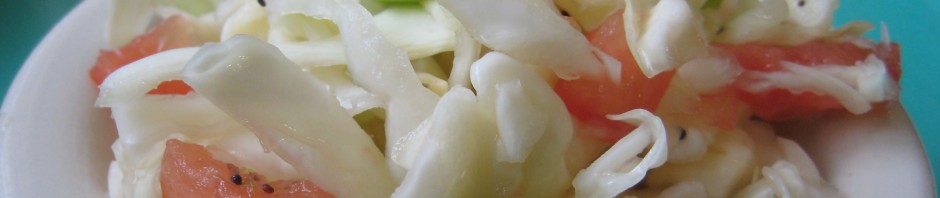
Everyday Cole Slaw.

I was making some cole slaw to go with fried fish the other night and mentioned I was doing nothing special, just everyday cole slaw—actually I needlessly used a four-dollar synonym, “quotidian”, and my wife commented “to me, all cole slaw is quotidian”. When you have been married a long time and plan to stay married you have to ignore slights like that, plus I had brought it on myself by denigrating the product at hand.

The fact is, every cole slaw is unique and wonderful in its own way. We waxed poetic in a long ago post, The Miracle of Cole Slaw, and everything said therein is still true. This one follows the basic proportions for a slightly acidic dressing but with a couple of tricks: celery salt (you could also use ½ t celery seed and 1 t Kosher salt, if you don’t have celery salt) for added tang and red wine vinegar instead of the usual cider vinegar. Makes 8-12 servings.

Ingredients:
2 lbs green cabbage, shredded with a box grater
3 T mayonnaise
1 T buttermilk
1 ½ T red wine vinegar
1 t celery salt
½ t Kosher salt
½ t ground black pepper
2 green onions, sliced into rings, including some of the green

Method: add all other ingredients to shredded green cabbage and mix thoroughly. It will be a big dry, but the cabbage will throw off liquid as it cures. Refrigerate at least 2 hours before serving.

Posted in Eating, Recipes, Sides | Tagged , , | 1 Comment

Memories of Thanksgiving past

2017 Turkey

A memorable turkey from a past Thanksgiving.

We didn’t buy a turkey for Thanksgiving this year. Seeing as how prices are up and supplies are allegedly short (though there are plenty of birds, both generic and fancy, in our stores in upstate New York) we decided to defrost a bird we’ve been hoarding since before the pandemic. We switched it from freezer to fridge last Friday; if you’re planning to cook a frozen bird and it is still frozen you better get started right away. (We’re not food safety experts and not making a recommendation, but it seems like common sense that you can start the defrost process on the counter to speed it up, and transfer to the fridge once the outside reaches 39 degrees, the temp inside your refrigerator.)

In the spirit of using up stuff, we’re going to recycle our old Thanksgiving posts rather than writing a new one this year—a clips post of clips posts, as it were. In 2020 we talked about cooking your first turkey, which we figured a lot of people would do rather than dining with relatives during the pandemic. (That might be a good idea this year as well, with numbers spiking once again.) In 2019 it was how to have a successful Thanksgiving by making other people do the work. In 2017 it was about reducing the stress that many people experience when faced with cooking a complex meal for lots of critical in-laws.

Click any of the links and you’ll find tips for brining and cooking the bird, stuffing it, and dealing with the buy/make your own cranberry sauce conundrum. (We fondly remember our cranberry sauce taste test way back in 2012.) And for God’s sake don’t forget the Durkee’s dressing which you’ll need for those Friday morning turkey sandwiches.

Posted in Cooking, Eating | Tagged , , , | 5 Comments

Taste test: Galbi vs Bulgogi

Galbi Grilling

Galbi on the grill!

In a previous post we described the parameters for our Galbi vs Bulgogi taste test. We’d use beef flanken ribs for the Galbi, and there was a nice prime top sirloin on sale at the same butcher so we picked that up for the Bulgogi. Feeling a little experimental, we also defrosted one of our supermarket packages of American-style short ribs cut along the bone, to try Maangchi’s more authentic Korean butterflying method. And we created our own “best of” marinade which you can find in our Galbi recipe post.

Bulgogi Grilling

Bulgogi grilling. Be careful it doesn’t fall through the grate!

The marinade ingredients went into the mini-chop and came out as a paste, which we rubbed into our sirloin and flanken ribs in the same bowl. Meanwhile, we prepared Maangchi’s no-soy marinade in which the butterflied ribs get lubricated with sesame oil, then a dry rub with sugar/salt/black pepper and sprinkled chopped green onion and garlic on top before they are rolled up. All meats marinated a little more than 2 hours, then it was time to fire up the grill in the BlueStar.

Galbi Plated

Galbi plated, with red lettuce and ssamjang sauce.

The winner was Galbi, of course, but not necessarily for their “luxury”. Bone-in ribs are just a lot easier to cook and a lot more fun to eat! The crosscut bones in flanken ribs act as an insulator, keeping the meat a little above the hot grill, and the marbling makes them easy to cook without burning or sticking. We had sliced the Bulgogi when not-quite-frozen to get really thin pieces, and now it proved quite a job to keep them from falling between the cracks of the grill or getting overdone. The butterflied full-size rib also cooked well though the no-soy marinade was less interesting than the other.

Maangchi Style Ribs

Maangchi-style spareribs, butterflied and rolled up to cure.

The KBBQ was served with two kinds of kimchi (our Happy Bellyfish recipe and a milder one made with daikon radish), haiga rice, red lettuce for wrapping around the meat, and an intensely flavorful ssamjang sauce from the Koreatown cookbook; ingredients and prep information in our Galbi recipe post.

I mentioned the Galbi was more fun to eat: you provide scissors at the table to cut the rib meat into bite-size pieces (in a restaurant the server might do this for you) with the bones on the side. Spread a bit of ssamjang on a lettuce leaf, wrap it around the meat: flavor explosion. And the riblets are a bonus to chew on when you’re done.

Galbi Bones

Galbi bones for gnawing.

The Bulgogi was fine, and we managed to avoid overcooking it. (And the marinade was a good flavor note, but it would have been overkill to prepare two slightly different recipes because the beef and char flavor predominated.) The butterflied Korean-style ribs cooked up well (though the bones are too big to gnaw on, alas) and we’d try those next time with our Korean marinade if flanken ribs are unavailable. But now we’re a big fan of non-authentic LA Galbi: along with Disneyland, the Hollywood sign and the La Brea Tarpits, they’re one more gift to the world from SoCal.

Posted in Cooking, Eating | Tagged , , , | Leave a comment

Galbi vs Bulgogi… which Korean BBQ entree is better?

Price Chopper Flanken Ribs

Flanken ribs for Galbi; note the bones cut crosswise at right. (We borrowed this photo from our local supermarket’s website, which advertises flanken ribs but doesn’t actually sell them.)

Galbi vs Bulgogi? Most Koreans would tell you a taste comparison isn’t even worth doing. In a typical comment in a recent restaurant review, my Yelp friend Josh B wrote “select galbi over bulgogi if you agree that kimchi is preferable to lettuce”. That’s because Galbi is a luxury food, reserved for special occasions, while Bulgogi is a run of the mill meat for KBBQ*. If you find both on the menu in a Korean restaurant, Galbi is likely to be considerably more expensive.

But the differences between the two cuts of beef used are actually not that great, apart from those rib bones. Galbi meat comes from the short rib and is presented with the bone on (more on this in a minute). Bulgogi is a lean, tender cut of steak which might come from the rib eye just above the short rib, or maybe a fillet, sirloin or flank steak.

So maybe the big difference is in the marinade? Each will spend one hour (or maybe much longer, if you buy pre-marinated meat) in a soy-based marinade with sweetener and grated pear for tenderizing and typical Korean seasonings. Can we just use the same marinade for both? I asked this question on the Korean cooking group on Facebook and was told oh no, the Galbi marinade is sweeter or uses more fruit.

After comparing recipes from multiple sites and books of Korean recipes, we concluded that while the proportions of ingredients may be different, the flavor profiles are not far apart at all.

Here, for example, are the recipes from the very popular maangchi.com site (we’ve normalized the order of ingredients and quantities so you can truly compare apples to apples, or pears to pears in this instance):

Maangchi’s Bulgogi Marinade Maangchi’s Galbi Marinade
6 T soy sauce
6 T brown sugar
3/8 t ground black pepper
1 ½ cup crushed Korean pear
3/4 cup onion purée
12 cloves of minced garlic
3 green onions, chopped
3 t minced ginger
3 T toasted sesame oil
several thin slices of carrot
1/3 c soy sauce
1/3 c water or cooking wine
¼ c honey or 1/3 c brown sugar
1 t ground black pepper
2 c crushed Korean pear
8 cloves garlic
1 medium onion
1 t chopped ginger
2 T toasted sesame oil

You might also compare the H Mart recipes for Bulgogi and Galbi and you’ll find the same similarities, though the Galbi is more complex (because it’s “special”). So we say there’s nothing wrong with making one marinade, erring on the side of more ingredients rather than less, which gives us a purer test of the meats themselves.

Now, about those rib bones in the Galbi. We went to considerable lengths to find flanken ribs, in which the whole rib roast is sawn across the ribs to produce long strips of meat punctuated by a section of bone every couple of inches. This is the only way we had ever experienced Galbi in numerous California restaurants. It turns out that ribs prepared this way are called “LA Galbi” after Los Angeles Koreatown, and it’s not the way the ribs are cut in Korea. There, the meat is cut along the bone on one side of the rib, then the meat is butterflied so you end up with the bone attached to a long strip of meat. Maanchi demonstrates this beautifully in a video presenting an alternate recipe for Galbi. (The short rib pieces she starts with are maybe half the length of the short ribs you find in American butcher counters, so you’d need to ask a favor of your butcher or simply deal with super-sized Galbi.)

Ready for the results of our taste test? You can read about it here.

*One of our favorite Korean cookbooks is the out-of-print Growing Up in a Korean Kitchen, by Hi Soo Shin Hepinstall. In her Bulgogi recipe the author comments that Koreans have a sentimental attachment to a grass-fed beef called hanu kogi which is flavorful but a bit tough. This may contribute to the perception of Galbi as a superior dish.

Posted in Cooking, Eating | Tagged , , | Leave a comment

The food groups of Facebook

Squirrel Stir Fry

Squirrel Stir Fry, from Our Hmong Table.

“I came home and saw my dad hard at work mincing meat on the wooden chopping board. If my dad’s cooking it’s going to be good. He spent a long time in the kitchen today and I didn’t know exactly what he was making, until I saw the head of a squirrel by the side of the minced meat…”

Tub Thao, post in Our Hmong Table on Facebook

We’ve previously posted about our experiences in some Facebook food groups, specifically Aspics with Threatening Auras and Questionable Vintage Recipes. Facebook believes we are up for more adventure so has made some suggestions we’ve happily followed, and you can too. In most cases you just need to agree to obey the rules of the group.

Our Hmong Table is maybe our favorite, with lots of socializing and good fun mixed in with the recipes. It seems like kapoon is the solution for any cooking need. What do rich Hmong bring to a cookout? Nothing that’s why they’re rich. You get the idea.

Korean Cooking is focused on authentic preparations of dishes the members may have tried, often with suggestions from other members. Recently there were numerous posts on what to do with too much shiso/perilla, a problem we had a couple months back.

Lao & Asian Kitchen Cooking has a lot of nice photos but relatively few food prep tips. And Pho Is Life is mainly about how to get a good bowl of soup in the Minneapolis area. (There is no geographical distinctions to the groups; Korean cooking seems pretty spread out while Our Hmong Table has a lot of suggestions from California’s upper Central valley, Fresno up to Sacramento, which we can check out next time we are in CA with a rental car.)

Best of all, the groups seem relatively cordial, with respect for newbie questions and very little of the finger pointing and sarcasm that pervades much social media these days. (Though maybe that’s because of good moderation.) Check ‘em out!

Posted in Eating, Food for Thought | Tagged , , , | Leave a comment

Recipe: Pav Bhaji (Mumbai street food)

Pav Bhaji with condiments

Pav Bhaji with typical condiments: chopped onions, lime or lemon wedges, chopped cilantro.

This is the Pav Bhaji I made in Minita Sanghvi’s cooking class, taking notes frantically because she cooks from instinct, not recipes. The quantities for some spices seem quite small but the dish was not lacking flavor; feel free to add more if you like. Makes 10 main course servings.

Ingredients:
3 large potatoes, about 2 lbs, peeled and cut into 1 inch cubes
8 oz cauliflower florets, fresh or frozen
8 oz peas and carrots mix, frozen
2 medium onions, preferably red, peeled and chopped medium fine
8 cloves garlic
½ green bell pepper, seeded and cored and coarsely chopped
¼ t cumin powder
½ t turmeric
½ t nigella/galonga (optional)
¼ t asafoetida (this spice is used by Jains who are not supposed to eat onion or garlic; since those are already in the recipe I would consider eliminating it)
½ bunch cilantro (reserve the rest for garnish)
2-4 oz butter, ghee, neutral oil or a combination (Minita used a full stick of butter; I did half butter, half peanut oil)
2 jalapeños, stemmed but not seeded and finely chopped
8 garlic cloves
2 t Kashmiri chili powder (can substitute non-smoked paprika but the flavor is not the same)
3 T Pav Bhaji masala (essential; buy from Amazon or an Indian foods store)
28 oz can diced tomatoes
Salt to taste (maybe 1 T)

Dinner rolls:
Butter
Kashmiri chili powder or paprika for rolls
Salt
Chopped onions (for garnish)
Chopped fresh cilantro (for garnish)
Quartered lime or lemon (for garnish.

Method: cook the potatoes in a good amount of salted water until just tender; add cauliflower, peas and carrots after a few minutes so all are cooked tender. Drain and reserve. Sauté onion in butter or oil mixture over low heat, gradually adding spices and stirring as you go: first the garlic, then jalapeños, then cumin, turmeric, asafoetida, nigella, Kasmiri chili powder. When the onions are tender and spices are well blended and aromatic, add the tomatoes, then the drained vegetable mixture. Add Pav Bhaji masala and salt and adjust seasoning to taste. Mix with a stick blender or stand blender to your desired preference, lumpy or smooth.

Slice dinner rolls in half and heat in a toaster oven or skillet with a good amount of butter. Serve with the pav bhaji along with chopped onions, lemon or lime slices and chopped cilantro for garnish.

Posted in Cooking, Mains, Recipes | Tagged , , | Leave a comment

Pav Bhaji, where have you been all my life?

First Pav Bhaji

Our first Pav Bhaji.

In the midst of a competitive campaign for a local city council seat, my friend Minita Sanghvi took time out to teach an Indian cooking class. She gave us a choice of 3 dishes we could make. One of them was Pav Bhaji, whose picture showed what looked like a buttered roll sitting next to a vegetable stew. Parker House rolls in Indian cooking? Got to try that!

Minita explained this was a favorite street food in Mumbai, and that it was heavily influenced by Portuguese colonization of the west side of India in the 16th century. The Portuguese brought tomatoes, potatoes, chili—and bread. Though the bread of that time would be nothing like today’s lighter white flour breads because the flour would have been darker and coarse ground and the yeast would come from a variety used to make alcoholic drinks.

The ingredient list included Pav Bhaji masala (affiliate link!), a special spice blend of “chilli, coriander, dry mango [aka anchoor powder], fennel, cumin, pepper, clove, cinnamon, black salt, big [black] cardamom & refined palmolein oil” according to the MTR package description. I went to my local halal market to find it and the friendly proprietor said “oh, you like pav bhaji?” in an approving tone and then “what are you going to do for the bread?” When I told him I was just learning to make it he sent me next door to Aldi where I found brioche dinner rolls, an excellent choice.

Cooking pav bhaji is fairly straightforward. You sauté chopped onions, garlic and green bell pepper in a lot of butter and add various spices as you go, then pour in a generous amount of chopped tomato. Separately, you boil until tender potatoes, peas, carrots and cauliflower. Blend it all in a blender or with a stick blender to the consistency you like (I chose slightly lumpy) and you’re done—except for the bread for which Minita used potato rolls from our local store. She added a good amount of butter to the skillet in which she had cooked the onions and heated the rolls on both sides till they were toasty and buttery, then sprinkled on Kashmiri chili powder (you could also use paprika) and salt and we were good to go.

I am not generally a fan of vegetarian Indian cooking because it is usually too bland for me, but this stuff was terrific, full of flavor and an excellent balance of warm spices, herbs and heat. I wasn’t sure what to do with the roll: make a sandwich? Dip it? Eat it in alternate bites with the stew? (Supposedly the sandwich was not invented until the 18th century, though Wikipedia points out that people had been documented eating meats wrapped in a bready covering since ancient times.) Turns out all the above work well.

Minita says pav bhaji, in spite of its vegetarian ingredients, is considered “junk food” in her home—perhaps because of all that butter. Makes me feel even better about eating it. She won her election, by the way.

Here is our pav bhaji recipe, based on the ingredients we cooked.

Posted in Cooking, Eating | Tagged , , | 5 Comments

What does cheesecake taste like?

Strawberry Cheesecake

Fresh Strawberry Cheesecake is their most-ordered item, says the Cheesecake Factory.

The Wall Street Journal recently did a piece on how the Cheesecake Factory chain thrived through the pandemic by increasing takeout orders. One of the secrets, as Atul Gawande wrote in a famous 2012 New York article, is process—there’s a 500 page operations manual and a procedure for everything, including how to describe cheesecake.

“Adding your delicious descriptions helps guests find the cheesecake they’ll enjoy most,” the guide instructs employees. “Use words that are natural to you and be sure to include your enthusiasm!”

Here are 42 words Cheesecake Factory provides to prime the pump:

Amazing Baked Chewy Chocolatey Chunky
Covered Creamy Crispy Crunchy Decadent
Delectable Delicate Delicious Dripping Drizzled
Extraordinary Fabulous Fantastic Full Gooey
Heavenly Layered Mouthwatering Out of this world Oozing
Light Loaded Rich Scrumptious Silky
Sinful Smooth Soaked Soft Sprinkled
Sweet Swirled Tart Unbelievable Velvety
Yummy Yum-a-licious

What’s interesting to me is how few words actually describe the taste of cheesecake, and only a few more describe the mouthfeel. The rest are about the experience—how you will feel, about yourself and the dish, as you are eating it and how you will be perceived by others.

Some time ago, when I was writing professionally for a meat company, I made a post about how hard it was to come up with adjectives describing taste and mouthfeel without repeating yourself. I later did some catalog writing for Allen Bros., an upscale steak purveyor, and inherited a copy style which was about how “your guests” will react when you serve up your perfectly cooked meat: you paid a pretty penny for this steak, and you want to make damn sure they’ll appreciate it. But still, it always started with taste—that first bite that confirms to the eater this is the good stuff, a cut above the rest.

Cheesecake Factory is doing something different. They want customers they’re doing something special and not a little sinful, simply by ordering such a payload of carbs and calories. I am sure Atul Gawande would approve—especially because he is a doctor by trade (the New Yorker article was about how healthcare delivery should be organized more like the Cheesecake Factory) and these gooey, oozing slices mean lots of new business for his profession.

Posted in Eating | Tagged , , , | 7 Comments