Food for Thought: House of X Tia

Christina Tia is a Lao cook who shows a lot of media savvy in promoting her YouTube channel through Facebook, Instagram and more. She’s been doing it skillfully for several years yet has relatively few views (in the tens rather than 100s of thousands) perhaps because of the specialized interest in Lao cuisine. She definitely deserves a wider audience.

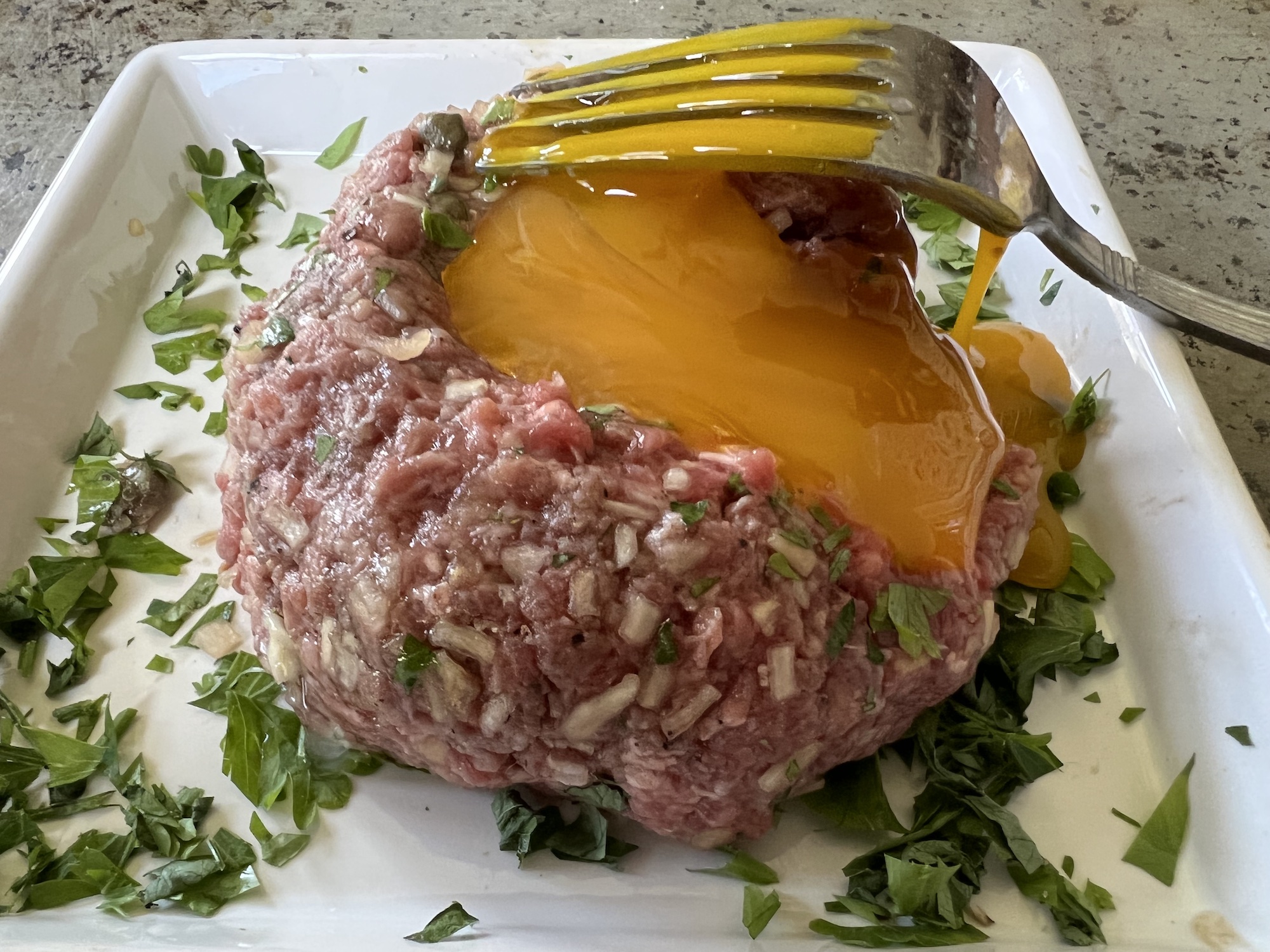
We followed her Lao Steak Recipe and produced an excellent result. (Let us know if you catch the blooper regarding the cut of meat she’s using, at the very beginning.) And when someone asked on Lao and Thai food for an easy Kapoon recipe, there were several links to this video.

One mild criticism: for someone who is so skilled in social media, Tia is lax in policing her own work. She forgot an ingredient in the YouTube steak video, and Kapoon spent some time without sound. If you’re paying attention, it will be easy to catch these errors and work around them. But most creators would have fixed the flubs to begin with.

There’s also a lot of good technique in these videos. While remaining true to traditional results, House of X Tia does not hesitate to find workarounds for ancient methods using modern kitchen tools and facilities. She’s smart, practical and well organized.

House of X Tia is yours to explore for free on YouTube, so get to it. Learn about a new cuisine and help push her subscriber numbers a lot higher. Check it out.

Posted in Eating, Food for Thought | Tagged , , | 3 Comments

Prep a perfect pickle plate


Pickle Plate

Now that’s a pickle plate!

Comfort Kitchen, an upscale burger joint in our town, puts together an excellent pickle plate. Browse the pictures in their Yelp listing and you’ll see how it has evolved over time. There’s always a cucumber pickle, always pickled onions, turmeric pickled cauliflower, pickled carrots and some kind of wild card pickle that varies with the seasons.

The goal seems to provide the widest possible variety in the ingredients, how the vegetables are cut and how the pickles are seasoned. You can put some on your burger and much the rest… pickle heaven! And the menu price (as I recall—pickles are on hiatus at the moment) is around $4 which is easy on the wallet yet entails maybe a 10% food cost for the establishment.

We decided to put together our own pickle plate and were particularly pleased with the result. Here’s the deconstructed view of our components, going clockwise starting at 12 o’clock:

Turmeric Cauliflower Pickles: there are favorite at Comfort Kitchen and it’s easy to see why. They’re a perfect sweet/sour balance and the exotic whiff of curry and turmeric makes you feel heathy.

Guido’s Half Sours: we were planning to use David Chang’s Quick Pickles as our cucumber component, but wanted to see how a lacto ferment would get along with a vinegar pickle. They went together just fine.

Pickled Red Onions: we used this recipe, but sliced them lengthwise rather than into rings so you end up with pickle strands which are easy to add to a burger. Not as Instagrammable as rings, but a more efficient use of product with very little waste.

Pickled Rutabagas: this is our hat-tip to Comfort Kitchen’s strategy of always including one novelty pickle. Based on our Pickled Turnips Mediterranean-Style recipe, but using the turnip’s denser cousin and without beets since we already had a red component in the onions.

Carrot Pickles with Ginger and Anise: we wanted to include a rice vinegar pickle, but this was a little mild compared to the other strong flavors and we might amp up the spices next time. (But do try the recipe on its own; not all pickles have to be intense.) If we had been using our rice vinegar pickled onion recipe, the carrots might have been pickled escabeche-style, with lots of oregano and garlic.

Comfort Kitchen pickle Plate

Here’s the pickle plate served to my Yelp friend Steve N. at Comfort Kitchen.

About the pickling method: all these were refrigerator pickles, designed for quick consumption within a few days, so we could skip the complications of a water bath for canning. Our general technique (see individual recipes for variations) was to boil the vinegar/spice liquid to bring out the flavors, add the vegetables to the cooking liquid and let it return to the boil, then cool to room temperature and transfer to refrigerator jars. For denser product, like carrots and rutabaga, leave at a simmer for a few extra minutes. For more delicate veggies, like cauliflower florets, omit the return-to-boil time.

Posted in Cooking, Eating, Sides | Tagged , | 2 Comments

Recipe: Carrot Pickles with Ginger and Anise

Carrot Pickles Ginger Anise

Carrot Pickles with Ginger and Anise. I got this nifty cutter to make the serrated slices.

Carrot pickles are a bit mild on their own, but they play well with others on a pickle plate. The ginger, anise and rice vinegar provide sweetness even without sugar. Makes 1 pint.

Ingredients:
3-4 fat carrots, peeled
1 whole star anise (or substitute 1/2 t aniseeds or fennel seeds)
½ inch chunk fresh ginger, peeled
2 cloves garlic
1 t Kosher salt
½ c rice vinegar
½ c water

Method: slice the carrots on the bias into ½ inch pieces. Bring all other ingredients to the boil in a saucepan then add carrots. Simmer 10 minutes or until carrots are just tender, then transfer to pint canning jar. After pickling liquid has cooled to room temperature, pour on top. Add 50/50 mixture of rice vinegar and water if needed to top off jar. Keeps in refrigerator for a week or two.

NOTE: recipe can be multiplied if you would like to can pickles following your usual water bath process. Or if you would prefer a fermented vs vinegar pickle, try this recipe from FARMcurious.


Here is the very efficient wrinkle cutter I bought on Amazon. (affiliate link!)


Posted in Condiments, Eating, Recipes | Tagged , , | Leave a comment

Recipe: David Chang Pickles

David Chang Quick Pickles

David Chang Quick Pickles.

If you look on page 65 of your Momofuku cookbook*, you’ll find David Chang’s recipe for quick salt pickles. It couldn’t be simpler: slice cucumbers super thin, then toss with a mix of 3 parts sugar to 1 part Kosher salt. Allow them to sit ten minutes and you have the crunchy goodness that goes into his legendary pork buns. Depending on  your preference, you can rinse off the (considerable) liquid the cuke will throw off and dry with a paper towel, or just serve it as is.

Then, turn the page and you’ll find his master recipe for vinegar pickles: 2 c water, 1 c rice vinegar, 6 T sugar, 2 ¼ t kosher salt. He likes to line up plastic takeout containers on a counter, put a different veg in each one, and pour over hot brine to cover. Refrigerate a day or until it’s sour to your liking, then eat. We don’t like this recipe as much because it’s a bit heavy on sugar for our taste, plus we enjoy a greater taste variety in our pickles. But it’s still a solid technique and very easy.

*You don’t have the Momofuku cookbook? Then order your copy right now. (Affiliate link!!) Judging from the condition of our copy, it’s one of the most-referred to books in our kitchen. And as a bonus, you’re likely to pick up some useful kitchen lore (and cusswords) as you read.

Posted in Condiments, Recipes | Tagged , , | 4 Comments

Recipe: Turmeric Cauliflower Pickles

Cauliflower Pickles

Turmeric Cauliflower Pickles in jar, ready for canning or refrigeration.

Comfort Kitchen, an excellent eatery in my home town, makes a nice cauliflower pickle with the yellow glow of turmeric/curry powder. Here is our interpretation. If you like, add some slices of red bell pepper for color and flavor variety. We used a bag of frozen cauliflower from the store, but of course you could start with florets from a fresh head of cauliflower. Makes 1 pint or a bit more.

Ingredients:
½ c water
½ c distilled white vinegar
10 oz bag frozen cauliflower
1 garlic clove
1 t turmeric powder
½ t curry powder
½ t kosher salt
½ t sugar
1 bay leaf

Method: place all ingredients except cauliflower in a small pan and bring to boil. Add cauliflower florets, bring back to the boil then turn off heat and cool to room temperature. Transfer to a pint canning jar adding more water/vinegar 50/50 if needed at top. Refrigerate at least 24 hours before trying.

If canning for future use: place the florets in a sterilized pint jar, then pour in the pickling liquid. Process in the usual manner. The water bath to seal the jars will tenderize the cauliflower.

Posted in Eating, Recipes, Sides | Tagged , , | Leave a comment

Food for Thought: The Fermentation School

Pumpkin Whole Utilization

Cover photo from Pumpkin Whole Utilization at The Fermentation School.

The Fermentation School, according to their website, is “ a collective of food authors and teachers who are fermenting a better food system for land, people, and the microbes on which we depend. Come on in and have a seat at our tables as we invite you into our spaces, share what we know and don’t, and make space for an open exchange of ideas and expertise. We believe that bringing fermentation into your life can open up infinite possibilities, and our commitment is to provide accessible courses that share our deepest knowledge, and to give you the confidence, skill, and empowerment to follow your own fermentation journey.”

They got our attention this morning with an email promising 50% off any fermentation course until [through?] Monday January 17 when you apply the code WELCOME50. We clicked to the catalog and were immediately drawn to the online recorded course Pumpkin Whole Utilization, taught by Jori Jane Emde. She is half, with Zac Pellacio, of the Fish and Game duo we met at the Saratoga Wine and Food Festival in 2013. Her creative projects then included making her own fish sauce and creating cocktails from wild ingredients foraged around Hudson, NY where the restaurant was located. (It’s now closed and Emde and Pellacio are now in New Mexico.)

But back to pumpkins. Emde’s course is going to teach you how to “make puree for baking, brine from the pumpkin water, vinegar from the roasted pumpkin skins, and miso with the seed and pulp.” Who could resist that, and the course is only $40 which means just $20 this weekend. We’re in! Yes, it may be a few months before we have another pumpkin on hand, but the course consists of “downloadable recipes + videos” and the FAQ says you can source a discussion group if you have questions and will have access to most courses for a full year.

The email mentions that the school was “created by two women fermenters and food system advocates” but in the spirit of a good collective does not say who they are. We suspect they are Kristen K. Shockey, who with her husband has published several fermentation books from her homestead near our old stomping ground in Jacksonville, OR; and Meredith Leigh, a whole animal butcher whose “How to Make Charcuterie” at $895 may be the most expensive course on the site. The fourth teacher mentioned by name is Claudia Lucero, who operates her own cheese business at urbancheesecraft.com.

There’s a lot to unpack here and the discount only lasts till Monday (and no, there is no affiliate relationship here; we really just wanted to share) so check it out!

Posted in Eating, Food for Thought | Tagged , , | Leave a comment

Recipe: Easy Gumbo

Easy Gumbo

Easy Gumbo made with shrimp. If you like, sprinkle on a little extra filé powder as a garnish.

Easy gumbo because this should not be a fussy (or expensive dish). The most important ingredient is patience. Take your time cooking the roux and then blending in some (high quality) stock. The roux is entirely capable of thickening on its own but we’ve added file (we got some really fresh stuff we wanted to try from Pinch Spice Market ) and okra for flavor. Serves 4.

Ingredients:

1 c bell pepper, stemmed, deseeded and chopped
1 c onion, peeled and chopped
1 c celery, chopped
6 T bacon fat, butter, neutral oil or a combination plus more for sautéing the veg
½ t thyme
¾ t Kosher salt
2 bay leaves
1 quart or more good stock: we used a combination of shrimp and chicken
3 T tomato paste
1 pound protein: peeled and deveined shrimp, cooked boneless chicken, maybe some andouille if you have it
2 T filé powder (optional)
½ c or more okra, fresh or frozen, sliced into ½ inch rings (optional)

Method: sauté bell pepper, onion and celery until wilted. Prepare the roux in a large saucepan you will later use to assemble the dish: melt fat and add flour, then cook slowly over very low heat till it is a medium brown and has a nutty aroma. Do not let it burn! This roux should be a little thinner than the roux you make for gravy; the oil will not quite absorb and you should still have some liquid in the dish. Add more oil if needed to achieve this texture. Roux should cook for at least 15 minutes. You might try putting the pan in an oven at low temperature to brown, after the oil and flour are thoroughly mixed.

Gumbo in Pot

Easy Gumbo in the pot.

Next, start adding stock to your roux. Do this a little at a time, and add more when the sauce starts to thicken. You will be surprised at how much liquid this roux can absorb. In fact, we re-heated our gumbo the next day and added still more liquid. This extensibility must have been welcome in the south in the old days if unexpected company dropped by.

When the stock is fully absorbed, add spices and tomato paste and cook for a good long time over low heat—at least an hour. At the end it should taste rich and delicious. Add protein and optional filé and okra and heat through. Serve hot, over rice. If you have leftovers, feel free to dump the rice (as well as any side dish vegetables) into the pot for the next day.

Roux vs okra vs filé: the origins of gumbo. Robert Moss has written two fine articles on gumbo for Serious Eats. This one traces the origins of gumbo and this one covers the more recent introduction of roux as the thickening agent. Gumbo means okra in several west African languages, hence the name of the dish and the use of okra as an ingredient and thickening agent. Filé or gumbo file is the powdered leaf of the sassafras tree which was used as a thickener by native Americans in the south. Moss’ hypothesis is that the two were used interchangeably by Black cooks in the plantation south, with the powder taking the place of fresh okra in seasons where the latter was unavailable.

Roux has a completely different trajectory. It first makes an appearance in gumbo recipes in the late 19th century, and was popularized as a gumbo thickener by Paul Prudhomme, the Cajun chef who developed his recipe at Commander’s Palace and then served at his own restaurant, K-Paul.

We’d hazard a guess that the roux-thickened version is the one most people are familiar with today (we’ve enjoyed it both at K-Paul and at Johnny Cace’s in Longview TX), with okra and filé powder added for flavor and texture. One day we will experiment with stews thickened with okra only, and filé powder only, but for now this easy gumbo made with roux will do quite nicely.

Posted in Mains, Recipes | Tagged , , , | 1 Comment

Sau-Sea Horseradish is our house brand.

Sau See Horseradish

Sau-See Horseradish is just what these cubes of prime rib are waiting for.

When I worked as a prime rib cook and carver, we’d make a sour cream sauce with a dab of Atomic Horseradish. A little went a long way. Sniffed straight out of the jar it would make your eyes tear up, induce coughing, and cause a reaction as if someone had stuck a COVID swab all the way up your nose and into your brain. That’s what you want in a good horseradish, and Atomic is readily available on Amazon. (Affiliate link!)

Horseradish Sour Cream

You don’t need a recipe to make horseradish sauce. Just add horseradish to sour cream till your eyes start to water.

But for everyday use, Sau-Sea brand horseradish does an excellent job, and you can quite likely find it in the cold case next to your grocery store’s fish department. It’s definitely pungent, and far more potent than brands like Gold’s that look authentic but have barely a hint of heat. And we will not even talk about the shelf-stable varieties that have oil and other stabilizers added.

We use Sau-See horseradish for a sour cream dip for Christmas prime rib dinner (which is how this topic came up; our jar gave out at the worst possible time and luckily we found a replacement on Christmas eve) and cocktail sauce for shrimp or oysters. And that’s actually the extent of it. You don’t often use horseradish, but when you use it you want the good stuff.


Posted in Cooking, Eating | Tagged , | 22 Comments

Is Wine Insiders the best wine club?

Wine Insiders Screen Shot

This is the offer Wine Insiders was running on Christmas 2021. Yours will be different, but by checking it out you will get on the mailing list. Or use our refer-a-friend link to save $100 on a $200 order.

As we were settling in to the winter wave of COVID in November 2020, we got an email from Wine Insiders: join us for a virtual wine tasting with Martha Stewart plus get 6 wines appropriate for holiday meals for as I recall $50 shipped. It was hard to scroll past and ultimately we took the bait. And guess what: the wines were quite acceptable, on the high end of under-$20 bottles, and Martha did a stellar job of engaging and sharing with us during the Zoom session.

Is Wine Insiders the best wine club? That would be hard to judge from a Google search; I’ve never seen so many ads and so much clickbait around a simple query. Also, Wine Insiders does not fit the definition of a “club” because they do not ship until you ask them to. Yes, your inbox will swell with promotions but you can regard them lightly till you see the one that strikes your fancy. By contrast, Winc enrolls you subtly and automatically when you place your initial order. You have to choose wines for future shipments based on their algorithm but if you don’t choose they will simply bill your credit card at the appropriate interval; a family member found she had to order a case or more of wines on a deadline or see her “credits” (which she had paid for) disappear.

Recently, we decided to order again from Wine Insiders. It is possible, but difficult, to order direct from the website and pay a marked up “retail” price. Instead, we opted for a case highlighting French regionals, and we added a couple of chardonnays to qualify for a bonus of a deluxe fancy wine opener (more on that in a moment). The average price per bottle was again under $10, shipping included. The wines arrived with breathtaking speed, maybe 2-3 days from order to arrival. The case is so heavy that the person receiving the wine may need to unpack it at the front door rather than lifting it and carrying it inside.

How are they (or any mail order wine shipper) making money with these deals? A continuity program like Winc or Wine Insiders’ sister operation, the Martha Stewart Wine Club, relies on inertia: you will continue to get the wines unless you cancel and there may be a higher price for subsequent shipments. Wine Insiders’ under-$10 pricing for voluntary purchases is a real outlier. You’re not going to find these bottles in your local store; they’re more likely surplus production from wineries that also bottle wine under their own labels. But still.

If there’s a negative to Wine Insiders, it’s the customer service. Due to some computer issues, the promised corkscrew did not actually get attached to our order. We contacted customer service, they promised to send it separately, it never arrived. We were then offered a $15 credit to a future order which seemed miserly since the stated value of the premium was $50. They responded by raising the offer to $25. We replied we would rather wait for the item we had been promised and we pointed out that, even though they said it was out of stock, it continues to be included in current promotions. No response to that.

Wine Insiders Shipping Box

A case of Wine Insiders wines was too heavy to make it into the house and was offloaded on the front steps.

Also, you are not going to get any romancing (such as a guide with room for your tasting notes) with your order; the only materials enclosed with our shipments were brochures for other promotions. You need to save the URL of the promotion you ordered from, which will include descriptions of the wines, so you can refer back when you open them.

In conclusion, we are satisfied with the wines, love the pricing, but are concerned that the corner-cutting means Wine Insiders may be operating on a dangerously thin profit margin. Be sure to keep track of your credit card billing (or, better yet, pay with PayPal which protects you if something goes wrong).

Update: turns out Wine Insiders DOES have a wine club. It’s called the Wine Insiders Club Experience, and from the FAQ it appears to operate like other continuity programs in the industry. Not sure how we escaped this with our initial order and got placed into the non-club bucket; if you buy please check the fine print.

Also, if you decide to order from Wine Insiders and want to support this blog, here’s a refer-a-friend link that will give you $100 off a $200 order. (The actual web address is http://fbuy.me/v/chef_47 ) Not sure if it will work with the other discounts, so caveat emptor.

Posted in Drinking | Tagged , , | Leave a comment

The original Bruichladdich is back.

Bruichladdich

In the Bruichladdich distillery, from the 2013 New Yorker article.

The other day we commented on how we tend to stick with “better” choices in food and drink, using under-$100 Islay Scotch whiskey as an example. What would we do if we had all the money in the world and no compunction about how to spend it? Well, we might spring for this $600 Bruichladdich which just popped up on K&L Wines…. And therein hangs a story.

Back in 2013 the New Yorker ran a beautiful piece (which was reprinted in their food issue this past fall 2021) on the current owner of Bruichladdich (pronounced “Brook Laddie”), Mark Reynier. It seems that in 1994 Reynier had arrived at the gates of the distillery on a bicycle and asked if he could have a tour of the facility. But a sign indicated that the distillery was permanently closed, and when Reynier pressed the issue a worker inside the gate told him to “fuck off”.

It was then and there that Reynier resolved to buy the distillery and put it back into operation. As a London-based wine dealer with plenty of contacts in the industry, he actually had the knowledge and the resources to do so. In 2001 he and a consortium of investors bought Bruichladdich and began making whisky again. In 2011 they released the “Laddie Ten”, a $50 bottle (and thus within our price range) which they considered their flagship product. I hated it. Unlike all other Islays it is unpeated, which for me means it was short on flavor and unappealing at any price point.

Which is why I was so delighted that K&L has turned up a 1992 batch of Bruichladdich, from way back before the brewery closed. The review is unusually brief (maybe because few or no reviewers actually got to taste it) but compelling: “Black Art 9.1 marks the oldest Black Art released yet at 29 years of age. While the cask recipe of this 1992 distillate is a closely guarded secret, it is the bottled magic of mind and heart from Head Distiller Adam Hannett. Unpeated. Unparalleled.”

I am hoping that one of our readers will have the means and the initiative to buy a bottle. (You’d also have to be in a state where it can be shipped unless you pick it up yourself in CA, not a bad proposition.) If you do, please report back.

Posted in Drinking | Tagged , , | Leave a comment