How painful is the “Always Hungry” diet?

Always Hungry Diet Painful?

Not pretty but not painful either: marinara topped vegetables plus shepherd’s pie from the Always Hungry Diet

Like a baseball player in spring training, I started following Dr. Ludwig’s “Always Hungry” diet the day after the Super Bowl. This is the third time I’ve done it but this year I’m having a lot more fun. I’ve finished the first phase and am now in the second phase where complex carbohydrates are gradually reintroduced. Done right, the Always Hungry diet is not painful at all. The key is to focus on stuff you like (vs his sometimes spartan recipes, like the ghastly Creamy Cauliflower Soup) as long as it follows the tenets of the plan.

The idea of the Always Hungry diet is to re-train your fat cells not to store so much fat which leads to overweight. You do this by eliminating simple carbs (including sugar and beer [sad face]) and creatively using fats (coconut cream and dairy cream, among others, as well as butter and oil) to induce a feeling of satiety, plus filling up with lots of vegetables. I’ve lost well over 10 pounds thus far, improved blood pressure and lowered pulse rate, and feel more energy without being always hungry.

I’m regularly eating his grain free pancakes with fruit spread (recipe in the book, which you should buy if this approach appeals to you) and feel a sense of empowerment now that I’m past the initial phase and can drizzle on some maple syrup. The diabolical doctor’s shepherd’s pie (also in the book) would be welcome at any table; it has a zesty ground beef base with lots of fennel bulb, topped with a cannellini bean/steamed cauliflower purée that is a dead ringer for savory and well seasoned mashed potatoes. His breakfast smoothie, cashew coconut clusters and black bean tofu scramble (those are recipes we’ve tweaked and published here) are all worth a try.

Curry on Cabbage

Coconut beef curry served on shredded cabbage instead of rice

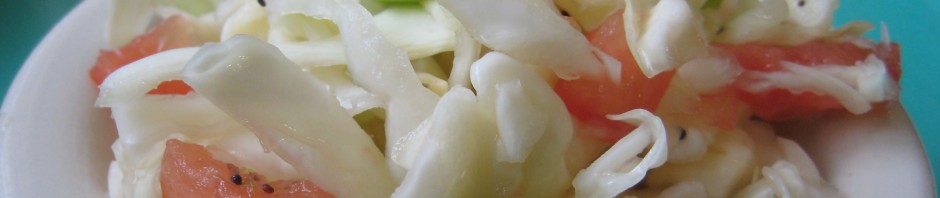
But my real breakthrough this year has been going slightly off script with dishes that taste “regular” but are still free of simple carbs. For example, you can take any steamed vegetable and ladle on some quality (meaning it’s not going to contain sugar) marinara sauce (I used the excellent La San Marzano we tasted last summer), top with mozzarella or other cheese, heat till the cheese melts and walla, you’ve got an excellent veggie main dish or substantial side. I have made spicy southeast Asian curries and served them over shredded cabbage, vs rice, which gives me bonus Asian cole slaw after the entrée is gone. Speaking of which, I’ve decided it’s okay to use the Hellman’s mayo in my fridge rather than making my own sugar-free mayo, which opens me up to dishes like Vincent’s cole slaw, of which I can eat as much as I want.

It’s entirely possible, though maybe not likely, that I’ll publish a few completely Ludwig-compliant dishes in the coming weeks. Meanwhile, I have to go pound a handful of mixed dry roasted nuts. As you can see, the always hungry diet is not painful at all.

Posted in Eating | Tagged , , , | 3 Comments

Taste test: Campbell’s tomato juice vs generic

Campbells Tomato Juice Taste Test

Store brand vs Campbell’s Tomato Juice

Of all the brand names that hold onto their premium pricing, Campbell’s Tomato Juice is surely among the most aggressive. At my market, a 64 oz bottle is typically $4.29 or so vs $3 for generic. That’s still a relatively low differential per serving when you consider the cost of other ingredients, like heirloom tomatoes and vintage sherry vinegar in my gazpacho, so I’ve bit my thrifty tongue and paid up for Campbells. But last week the store brand stuff plummeted to $2.50, prompting a long-overdue taste test.

The verdict: Campbell’s tomato juice tastes better but for one specific reason. It has more tartness, likely due to an extra jolt of citric acid and/or malic acid. This could be rectified at home with a squeeze of lemon juice. The tomato flavor in both juices is not going to confuse anybody with fresh, but either is fine as a base for a bloody mary or other composed beverage.

So vote your heart, or your wallet, whichever is nearest and dearest when you get to the juice aisle. And if your guests are likely to see the container, we won’t tell if you pour your new generic juice into your old (but well-cleaned) Campbell’s Tomato Juice bottle.

Posted in Eating | Tagged | Leave a comment

Chocolate and lemongrass at Winter 2019 Fancy Food Show

Manoa Ghost Pepper Chocolate

Be afraid, be very afraid: Manoa Ghost Pepper Chocolate at 2019 Winter Fancy Food Show

Single origin chocolate? Zzzzz…. So 2018. At the recent Fancy Food Show I sampled Scorpion Pepper chocolate from North Carolina, Lavender milk chocolate from Hawaii (source of the only cocoa nibs grown in the U.S.) and Salted Egg Cereal chocolate from Singapore. Each had a story to tell, about obsessive attention to quality and taste. All were found at the A Priori Food Specialty Food booth, offering retailers an “expansive collection of craft chocolate from around the globe, where the single unifying theme is cacao beans of respectable provenance.”

A Priori Distributors

A Priori Distributors booth at 2019 Winter Fancy Food Show

You can read about the complete selection on the A Priori website, and order many of them from their mail order partner, Caputo Imports. At present, there is no link to find a bricks-and-mortar retailer in a given location. You could look up the chocolatiers’ websites and contact them directly, or send a request to info@aprioridistribution.com. It’s worth the effort; this is mind blowing stuff worth getting your hands on.

Another source to check out is Angkor Cambodian Foods, offering “authentic sauces and condiments” from a family operation with a Cambodian chef. The flavor base includes lemongrass, kaffir lime leaves, galangal and turmeric. Cambodian spices are said to be similar to other regional cuisines but milder, which is what I found with the lemongrass paste they sent me home with.

Angkor Lemongrass Chicken

Grilled chicken thighs marinated in Angkor Lemongrass Paste

I tried their marinated chicken recipe (very simple: score the chicken and rub with the lemongrass paste mixed with a bit of oyster sauce, marinate for 2 hours, then grill in oven) then made a coconut beef curry and wanted to stretch out my condiment for another use so I mixed in some of the concentrated green curry in the little flat cans we find at Asian markets. The flavor profiles were indeed similar with the Angkor sauce milder but fresher tasting.

This is a Fremont, CA company and I want to support them as a former Bay Arean. Free shipping is offered on all their items, so there’s no reason not to give them a try.

Posted in Eating | Tagged , , , | Leave a comment

Marketing moringa with Kuli Kuli Foods

Kuli Kuli Products

Kuli Kuli moringa product line has a form factor for every taste and eating requirement

Moringa is, by all accounts, a miracle plant. According to Wikipedia, its seed pods are a popular ingredient in south Asian soups and curries. Its leaves can be cooked and eaten like spinach, and dried leaf powder can be used as a hand cleanser when soap is unavailable. Its seeds are eaten as snacks in some cultures, and the seed cake can be used to filter water. In the U.S. moringa’s most visible use is as a dried superfood, which is why I found myself talking with Lisa Curtis, CEO of Kuli Kuli Foods, at the recent Winter Fancy Food Show.

Powder made from the leaves of moringa oleifera offers “more Vitamin C, per gram, than oranges, more calcium than milk, and more potassium than bananas,” according to this article in Fast Company. Kuli Kuli’s website compares it to kale, probably the most-familiar green nutrition add-in, and reports it has twice the protein, four times the calcium and six times the iron. A downloadable brochure makes the case for moringa as a potential benefit for diabetes prevention, cardiovascular health and lactation enhancement and more. Having used it to make smoothies, I will add it doesn’t taste at all unpleasant though it’s a good idea to wash your blender before the excess dries out.

Lisa Curtis

Lisa Curtis, Kuli Kuli founder and CEO

Lisa Curtis was introduced to moringa as a Peace Corps volunteer in Niger, where local people offered it to her because she felt low-energy attempting to adapt to local foods on her vegetarian diet. “Kuli kuli” is the preferred form of ingestion, an energy snack mixing the greens with peanuts. She went on to found and grow her company first with the help of crowdfunding campaigns on Indiegogo (where she got $22,000 in pledges the first day) and AgFunder, which differs from Kickstarter in that funders are willing to put in at least $15,000. She also made an alliance with (and received backing from) Whole Foods and has since expanded to other stores with a total of 7,000 retail outlets in the U.S.

More recently, Kuli Kuli has received $4.25 million in Series A funding from Kellogg’s venture capital arm, and declared itself as a B Lab company which means a commitment to help its stakeholders—in this case the women in West Africa who grow and harvest the leaves. She’s also been recognized as a “30 under 30” social entrepreneur by Forbes, and was set to receive a Leadership Award at the Fancy Food Show the night I met her.

Why all these business details on a food blog? Because over the years I have seen countless underfunded gourmet food startups who come to the Fancy Food Show with a great concept and are never heard from again. They come hoping to find a distributor, which is possible but risky, or to make their case to the retail buyers which is such a long shot as to be unrealistic. Kuli Kuli, in contrast, is a company that is doing it right. If you’re a food startup, you can learn a lot of best practices just by poking around their website. Health benefits and company history are spelled out and accessible, and there are some terrific recipes. Also, look at how many form factors are available to buy their product: powder, bars, shots, smoothie mixes. There’s something for everybody so “I don’t know how I would eat this” is no long a legitimate objection. I stopped by my local health food store this morning and while there were half a dozen moringa brands, Kuli Kuli was the only one that offered a sampler package at low cost.

And then there’s the email I received from Julie Curtis, Kuli Kuli’s PR person, prior to the show, which I was the reason I agreed to the interview to begin with. She had taken the trouble to read my blog, and thought I might be interested because of a recent article on “good food that both makes you feel good and provides a platform for social good”. (The article in question was my recipe for Chili Crisp Ice Cream so we’re stretching it a bit, but okay.) PR folks, take note.

Posted in Eating, Food Heroes | Tagged , | 2 Comments

Food for Thought: Sweet Home Café Cookbook

I was excited, but also disappointed, when I visited Sweet Home Café inside the fabulous Museum of African-American History in Washington, D.C. The buttermilk fried chicken was moist inside, crunchy outside as it’s supposed to be. Collards, potato salad, cole slaw and cornbread were executed with dignity. But several of the day’s specials had sold out at the height of the lunch hour. And some of the signature dishes which opened the restaurant, like the oyster loaf, had been discontinued for lack of volume sales.

I feel the same way about the Sweet Home Café Cookbook. First appearances are jarring: it has a bright, simplified layout like one of those cookbooks appealing to beginner cooks you might find in Costco. There are some toothsome historical discussions, with graphics, at the beginning of each section. But the recipes themselves are presented without adornment, lacking the history and chef’s perspective that makes you eager to try a new dish.

Take cornbread, for example. There are 4 recipes for cornbread, 5 if you count hush puppies. But there’s no narrative to help you decide what makes them different, and why you might want to try one vs another. The recipe for Cracklin’ Cornbread advises the cook to substitute bacon if authentic cracklins are unavailable; chicharrones would have been a far better choice. And a recipe containing white flour and sugar is presented with a straight face, instead of the proper admonition that this is a bowdlerized, Yankee-fied version. One suspects such an explanation was there to begin with, but was eliminated so as not to offend anyone.

I generally need to find at least two or three can’t-miss recipes to recommend a cookbook, and on that basis Sweet Home Café Cookbook falls short. But I suggest you browse it and see for yourself. Get it out of the library (I did) or use the “look inside” feature on Amazon to explore a few of the recipes. Check it out.

Posted in Eating, Food for Thought | Tagged , | Leave a comment

Recipe: Grilled Artichokes

Grilled Artichokes

Grilled Artichokes

I dislike the experience of dipping cold, tasteless artichoke leaves in mayo or butter, just to get the nugget of meat at the end. This grilled artichokes recipe is a vast improvement. Every inch is soaked in flavor so you’ll end up chewing on those leaves even if you eventually discard them. Serves 4.

Ingredients:
4 jumbo artichokes or 2 regular size artichokes
½ c extra virgin olive oil
2 cloves garlic, peeled
2 salted anchovy filets or 1 t Kosher salt
½ t dried oregano
Pinch red pepper flakes
½ c grated or shredded parmesan
Lemon, for garnish

Method: trim the bottom of the stem, remove the inedible lower outside leaves, cut off the top with a chef’s knife. Trim the remaining outside leaves with scissors to remove the sharp ends and scoop out the insides with a spoon. Steam 15 minutes in acidulated water (add a splash of lemon juice or white vinegar) until an outside leaf can be separated easily from the artichoke. Drain and cool to handling temperature.

Cut the artichokes in half lengthwise and remove any remaining insides. Pulse sauce ingredients (except the cheese) in a mini-chop until emulsified, then work the sauce into the artichoke on all sides, making sure to get some in the cracks between leaves. Grill the outside, then the inside, on a hot grill or in broiler till nicely charred. Sprinkle parmesan on the inside then remove to a cooler part of the grill till the cheese melts slightly. Serve grilled artichokes hot with lemon for garnish; provide knife and fork so diners can cut out the tender bits before attacking the rest with their fingers.

Posted in Eating, Recipes, Sides | Tagged | 2 Comments

Bacon vs Pork Belly

Bacon Pieces

Is bacon the new pork belly?

Bacon vs pork belly… which is better? You’d think pork belly is the superior product because of the recent climb in prices. Thanks to its popularity as an appetizer and in ramen, pork belly has risen in price from a couple of bucks a pound to $7.99 at gourmet emporia and $4 or more even at ethnic markets. Meanwhile bacon has been holding steady. You can pay $8 or for a 12 ounce package at Whole Foods or Healthy Living but that includes processing and slicing. And if you are less picky you can grab a pound for $4 at major supermarkets or ends and pieces, to use as an ingredient, for much less. (Hatfield’s “seasoning” was a bargain $2.09 for a pound on special last week.)

But wait a minute. Isn’t bacon made from pork belly?

Bacon Ends and Pieces

I used this “seasoning” which is about half the price of good bacon.

Of course it is. Which is why our cultish pursuit of the lower section of the pig deserves a closer look. Why not just substitute bacon for pork belly in your recipes? You’ll get the same fatty unctuousness and porky flavor, plus smoke if you want it or a milder cure if you prefer. You can crisp it before use if you wish, which throws off bonus bacon fat for use in other recipes. Or dice it and put it in raw. Why not? Diners who are squeamish about “undercooked” bacon roll their eyes with delight over the same fatty texture in their pork belly.

I’m just putting this out there…

Posted in Cooking | Tagged | 2 Comments

What is the responsibility of a restaurant reviewer?

Boil Shack Crab Boil

I took this picture of a crab boil as my son was about to tuck into it. Had no idea he was setting himself up for such a ghoulish experience.

I guess there are still some small markets where a media outlet will provide a review as part of an advertising package for a restaurant. But more likely, the restaurant reviewer is presumed to be independent and reporting their experience objectively so the reader can make informed dining decisions. In cities like New York and San Francisco, this responsibility is taken very seriously and reviewers will make multiple visits before reviewing, then return on a periodic basis.

Which brings me to a brouhaha that’s currently happening in my local food scene in the New York capital district, around a review recently written by the leading newspaper’s main reviewer for a Cajun-style seafood place. The complete review is here, and it’s worth reading in its entirety because there are some positive comments, but here are a couple of key excerpts:

“Diners wearing purple surgical gloves pluck crustaceans from clear plastic trash bags and plink waste into anodized buckets like a surreal post-op party at a hospital… The well-oiled promise is of a ‘Louisiana-inspired restaurant’ with fresh seafood, customizable Cajun flavorings, Bayou cocktails and house-made desserts. We find none of that here. Food is either forgettable or inedible and by meal’s end the uneaten detritus is the subject of morbid fascination … No matter how you sauce your boil (dry, Cajun, lemon pepper are options), it arrives in a lunacy of diced garlic so thickly carpeted it burns like toxic waste and leaves hands and guts reeking for days. Cheap crawfish are at least correctly bright orange bugs to snap from shells, unlike spindly, damp, gray snow crab legs that trail like deadman’s hands from the deep.”

One gets the feeling the reviewer is unfamiliar with the concept of a seafood boil, in which a bunch of crawfish or other items are cooked in a spicy liquor then dumped on your table to be picked apart and eaten by hand. “Surgical gloves” and “trash bags” translate a straightforward description of the experience into something ghoulish. “Lunacy of diced garlic” is simply garlic sauce which is actually good (I’ve eaten there) and unlikely to “burn like toxic waste and leave hands and guts reeking for days.”

This reviewer so in love with the sound of her own voice that she had to bully this restaurant (where, she points out, many of the servers don’t speak adequate English) for the amusement of her friends, her readers looking for jollies rather than information, and most of all herself. She’s definitely not executing the responsibility of a restaurant reviewer–and she’s just getting warmed up.

Here’s what she says about the seafood tower, presumably a presentation of cooked and raw seafood: “a travesty of mushy shrimp, parched oysters flopped like limp tongues and swollen clams of an indeterminate tangy stickiness that strike alarm in the eyes of my guests, who refuse more. Great rubbery crabs’ limbs bend against our dutiful efforts to crack them open. When we succeed, they unleash incontinent gushes from boggy, defrosted flesh… Nothing can save us from a reckless decision to bite into deep-fried Bayou fried oysters that spurt out a sort of sickly wretched bile that has us worried we won’t make it through the night. A perfunctory gumbo lacks life or salt, and a head-on-shrimp left on top has committed hara-kiri in its shell.”

Okay, we get it, the seafood wasn’t fresh. But “sickly wretched bile” is another way to say that an oyster is filled with flavorful liquid. And if a shrimp committed hara-kiri, that’s sad (I didn’t know they were so intellectually evolved) but doesn’t actually describe the food or the dining experience.

Today Dominick Purmono, the owner and manager of one of the leading and most-respected restaurants in the area, shared on Facebook a letter that he wrote to the newspaper where these reviews appear about the responsibility of a restaurant reviewer. I’ll share it in its entirety:

“I was incredibly disheartened to read Susie Davidson Powell’s recent review of The Boil Shack. I understand that in a time of sensationalized journalism, egregious editorial reviews can elicit website clicks, boost social media shares, and sell newspapers and ad space. In my opinion, however, the review was below the standard of professionalism befitting a 162-year-old journalistic institution such as the Times Union.

“The review is saturated with self-aggrandizement and showcases the author’s desire to use such a powerful, public platform to shame these hard-working restaurateurs and staff. A journalist with any sense of empathy would have recognized that the restaurant is in flux, possibly even in peril. Perhaps she could have decided that these human beings don’t deserve to be treated so harshly during their inaugural period, privately shared her thoughts with the principals, and then returned for a re-review in a few months to allow them time to work out their miscues and better themselves and their business. Instead, Ms. Powell chose to emphasize all the problems of an establishment in its infancy, putting in jeopardy the reputation and livelihood of scores of people.

“Restaurants are hard work. They are astronomically expensive to open and to continue to operate. They require long hours of excruciating, humbling, back breaking work. They have thousands of moving parts and radiate with a sense of urgency and intensity akin to an operating room—especially when utilizing products that have shelf lives measured in hours. Her article does nothing more than devastate the painstaking efforts and morale of the people who have worked so hard to bring a dream to reality.

“Shouldn’t a restaurant reviewer’s goal be to introduce readers to dining experiences that highlight the culinary richness and gastronomic diversity of our region—and not to publicly humiliate members of our community? Simply put, the review is ruthless, it is cruel, it is heartbreaking for those involved, and it is unnecessarily mean.

“Congratulations to the team at The Boil Shack for creating something exciting & new and focusing your collective efforts towards a common goal.” (I couldn’t help bold-facing that penultimate paragraph because the sentiment is beautifully stated as far as the responsibility of a restaurant reviewer and where this review falls short.)

I write Yelp reviews from time to time and am well aware of the hostility many restauranteurs have toward Yelp because of wise-mouth reviewers who are the equivalent of the writer described above, pleasuring themselves, settling a grudge, or possibly trying to sabotage a place where they were fired or had some other negative experience.

I’m also aware that the vast majority of Yelp reviewers are not like that. They try hard to describe their dining experience for the benefit of others and they are recognized by votes, which cause their reviews to rise to the top of a restaurant’s review page where they are more likely to be seen.

“Self-aggrandizement” is a perfect description of what not to do if you are a restaurant reviewer, and what to watch out for if you are reading restaurant reviews. Unfortunately, this trait is found more and more in our society today and not just in restaurant reviewers.


Posted in Eating, Food for Thought | Tagged , , | 8 Comments

Super Bowl Taste Test: Chicago Style Hot Dogs

10 Count with Natural Casing

Components of my Vienna Beef Chicago Style Hot Dog Kit

The Super Bowl Taste Test almost didn’t happen, because of last week’s bitter weather in Chicago. My order from Vienna Beef sat on the tarmac for days till I finally gave up and started planning an alternative attraction. Then, late Saturday afternoon, the Fedex man dropped a box on my doorstep. It was the Vienna Beef order, and in perfect condition: still frozen but just barely.

Unboxing Hot Dog Kit

The Unboxing

Everybody should splurge on the Vienna Beef Hot Dog Kit at least once. It costs $41.95 (plus a reasonable shipping charge for a perishable item) and comes as either a 10-count natural casing Hot Dog Kit or 16-count Hot Dog Kit with skinless franks. You also get an equivalent number of their poppyseed buns plus celery salt, mustard, sport peppers and that legendary neon green relish. All you need to add at home is your own chopped onions, sliced tomato and pickle spear.

Vienna Beef Char Dogs

Char Dogs (notice how beautiful they crack open from the grill)

I ordered the natural casing dogs because the sausage itself was of primary importance for my Super Bowl Taste Test. I wanted to judge which was better: char dogs or steam dogs. I’d preferred the char version at Gold Coast Hot Dogs, but when I ordered the Vienna Beef rep informed me most Chicago hot dog stands steam, rather than grill, their product.

Steamed Vienna Beef Hot Dogs

Steamed dogs, still delicious

The game itself was boring, so there was plenty of time to devote to the taste test. My tasters told me they probably preferred the char dogs but by the slimmest of margins; some wouldn’t even make a commitment. But the forensic evidence told the tale. The char dogs were on a platter placed under the steamed dogs, yet they were the first to disappear. At the end there was only a lone dog remaining—and it was steamed.

Now that this is out of the way, I need to find a way to make those poppyseed buns at home. (I’ve never seen anything like them in a supermarket.) Both King Arthur Flour and Serious Eats have recipes, and they’re quite different. This should be fun.

Chicago Style Hot Dog

The finished product: Chicago Style hot dog, made at home


Posted in Eating, Mains, Recipes | Tagged , , | 2 Comments

Recipe: Super Bowl Cheese Rolls

Super Bowl Cheese Rolls

Super Bowl Cheese Rolls. Depending on your loyalties, the protruding piece on top could be the end of a Ram’s horn. Or the oozing cheese at right might be the back of a Patriot’s three-cornered hat…

Super Bowl Cheese Rolls couldn’t be easier to make, with these mods to my Acme Cheese Wheels. I made my own dough with 80% All Purpose Flour/20% Whole Wheat Flour but you could just as easily use a premade pizza crust dough. And instead of shredded cheese I used sliced deli cheese from the supermarket, which made handling easier. Makes 8 cheese rolls.

Ingredients:
Premade pizza dough from the deli case, approximately 12 oz
1/3 lb sliced deli cheese; I used a combination of Swiss and a cheddar spiked with Hatch chilis
Parmesan cheese for garnish

Super Bowl Cheese Rolls

Make a bunch, because these go fast.

Method: bring dough to room temperature. Stretch it out into a rectangle with approximately the same dimensions as an 8×13″ quarter sheet pan. (See the original recipe for assembly photos.) Layer cheese slices evenly across the entire surface, letting slices stick out on the long side. Roll up lengthwise into an 8″ roll. Using a serrated knife, cut into 8 pieces with equal thickness. Carefully transfer the slices to a Silpat or parchment paper inside quarter sheet pan, holding the edges tightly so the rolls don’t fall apart. Sprinkle some parmesan cheese on top of each roll.

Cover rolls with a towel and let rise 1 hour at room temperature until rolls have filled out somewhat. Meanwhile, preheat the oven to 425 degrees. Bake for 25 minutes till the cheese is thoroughly melted and the tops are brown. Serve warm.

Posted in Baking and Baked Goods, Recipes | Tagged , | Leave a comment